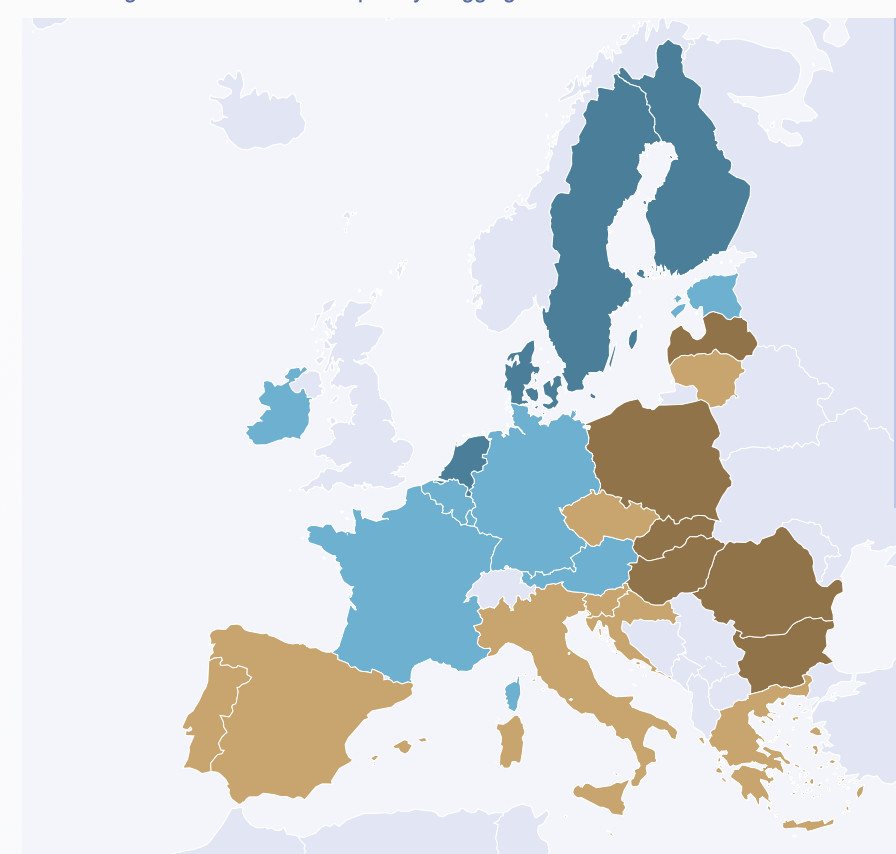
The European Commission’s European Innovation Scoreboard (EIS) 2025 confirms that Finland’s position is still well-placed among the Europe’s Innovation Leaders. With an overall innovation performance at 125.3% of the EU average, Finland ranks 4th among EU Member States. However, Finland’s relative performance in EIS has been on decline since 2023, and this trend shows its position among the leaders will be challenges in the future. Denmark, Norway and the Netherlands continue to outperform Finland in the EIS, and Ireland is quickly catching up.
Finland’s innovation strengths stand out in several areas, particularly in Digital Skills and Research Excellence:
- Lifelong learning remains a major strength, with Finland ranking first in the EU for adult participation in education (220% of the EU average).
- Finland performs strongly in digitalisation, as it ranks first in employed ICT specialists and business use of cloud computing.
- Research quality and collaboration are strong, with world-leading scores in international scientific co-publications and public-private co-publications.
The biggest challenges for Finland lie in the areas of Productivity and R&D Support
- Resource productivity remains among the weakest in the EU (27th place), reflecting heavy material consumption.
- The share of the population with tertiary education lags behind EU averages (71.8% of EU level).
- Government support for business R&D is comparatively low, at only one-third of the EU average.
In the Regional Innovation Scoreboard, all five Finnish regions (i.e. Suuralue) perform above the EU average. Helsinki-Uusimaa remains the country’s engine of innovation, ranking 8th in the EU overall, and first in areas such as ICT employment, international co-publications, and patent activity. Länsi-Suomi stands out as the EU leader in cloud computing in enterprises. Åland, while a smaller and more peripheral region, showed notable recent improvement, though its research intensity and international collaboration remain limited.
Overall, Finland’s RIS performance has, however, declined between 2023 and 2025 in nearly all regions except in Åland, thus reflecting similar downward trend in regions, as is visible in the EIS.
The 2025 EIS and RIS results confirm Finland’s strengths remain in digitalisation, skills, and research collaboration, but they also highlight some signs of slowing momentum or a risk of losing edge. While still among the innovation leaders, Finland should quickly address gaps in productivity, education, and business R&D support to remain competitive in the coming years.
Innovation is high on the European policy agenda and 4FRONT is proud to be part of the international team (led by EFIS Centre) updating and developing the EIS & RIS scoreboards for European Commission.
Take a closer look at European Innovation Scoreboard