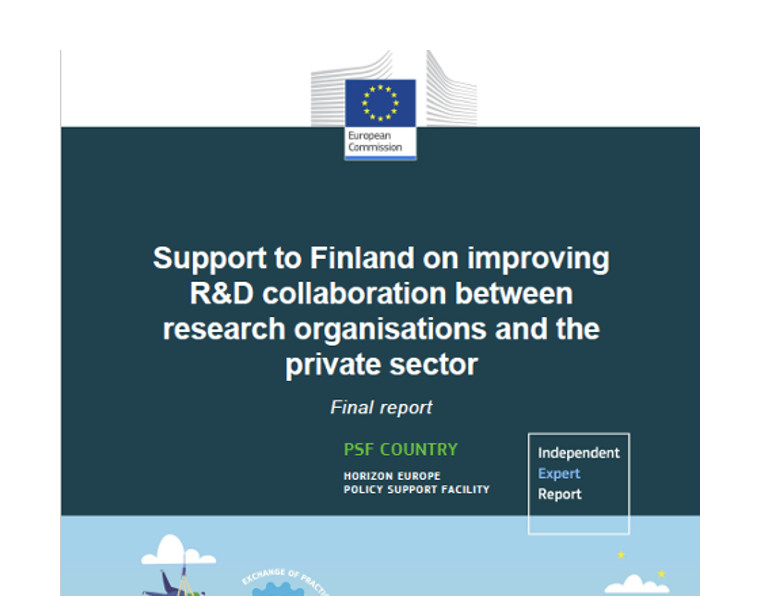
A new study highlights a critical challenge in Finland’s innovation landscape: while SMEs are highly active in R&D, their productivity, revenue growth, and intangible investments are lagging behind international peers. Addressing this gap calls for targeted policy measures, improved funding structures, and stronger incentives for technology adoption and innovation scaling.
The study, conducted by 4FRONT and assigned by Ministry of Economic Affairs and Employment of Finland, reveals that Finland’s greatest untapped innovation potential lies in scaling up new ideas and embracing emerging technologies. Finnish SMEs stand out internationally for their enthusiasm in research and development (R&D), as well as for creating new products and services. Yet, despite this strong innovative drive, their productivity and revenue growth remain lower than in many comparable countries. Moreover, when it comes to intangible investments outside of R&D—such as brand building, design, and skills development—Finland still trails noticeably behind countries like Sweden.
A company’s growth ambition plays a pivotal role in this context, as growth-oriented businesses invest in research, development, and innovation (RDI) more often, more broadly, and more substantially than others. At the core of this growth ambition—and a key driver of RDI—lies the determination and vision of the owners themselves.
The study also finds that the key public RDI funding services—such as Business Finland’s funding instruments and the development grants provided by the ELY Centres—are, for the most part, well suited to the needs of Finnish SMEs.
While there is a healthy supply of public funding for companies’ research and development activities, significantly less is available for other types of intangible investments and for scaling innovations—for example, piloting, acquiring references, building a brand, or making full use of existing new technologies. This suggests there is a clear need for broader funding options targeted at (growth-oriented) SMEs, enabling them to invest more flexibly in diverse intangible assets, business development, external expertise, and innovation scaling across different industries.
At the same time, certain structural bottlenecks have been identified. These include the increased emphasis on R&D activities within Business Finland’s funding criteria, as well as considerable regional disparities in the availability of ELY Centres’ development grants. Awareness of the different services is also limited, and the service pathways do not function as effectively as they could—leading many services to remain underutilised. Moreover, fostering collaboration between research organisations and SMEs requires the creation of low-threshold funding services tailored to the needs of SMEs.
To address these challenges and unlock SMEs’ full innovation potential, the study calls for coordinated action on multiple fronts. Strengthening incentives for growth-oriented ownership and entrepreneurship is essential to ensure ambitious companies have the drive and resources to lead innovation efforts. Innovation scaling and the adoption of new technologies should be embedded more firmly into RDI policies and funding frameworks, while research organisations must be encouraged to expand their incentives and service offerings for collaboration with SMEs. In addition, the suitability of the R&D tax incentive for SMEs should be assessed to ensure it genuinely supports their growth and innovation activities. Finally, greater clarity is needed in how RDI activities are defined and interpreted, creating a more predictable and transparent environment for companies to invest and innovate.
From Innovation to Growth. The study (in Finnish) about the challenges related to RDI activities and capabilities in SMEs in Finland can be found here.